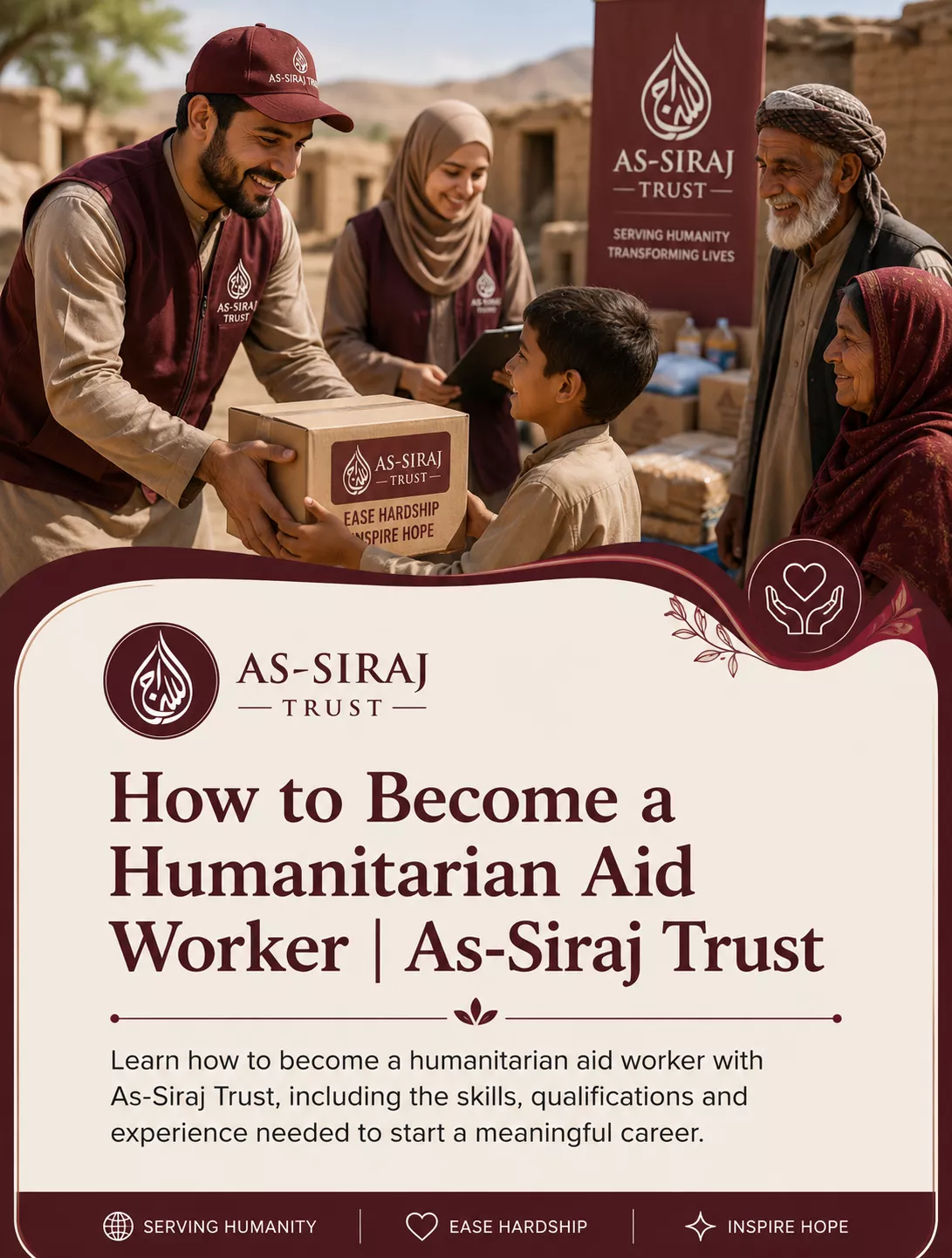
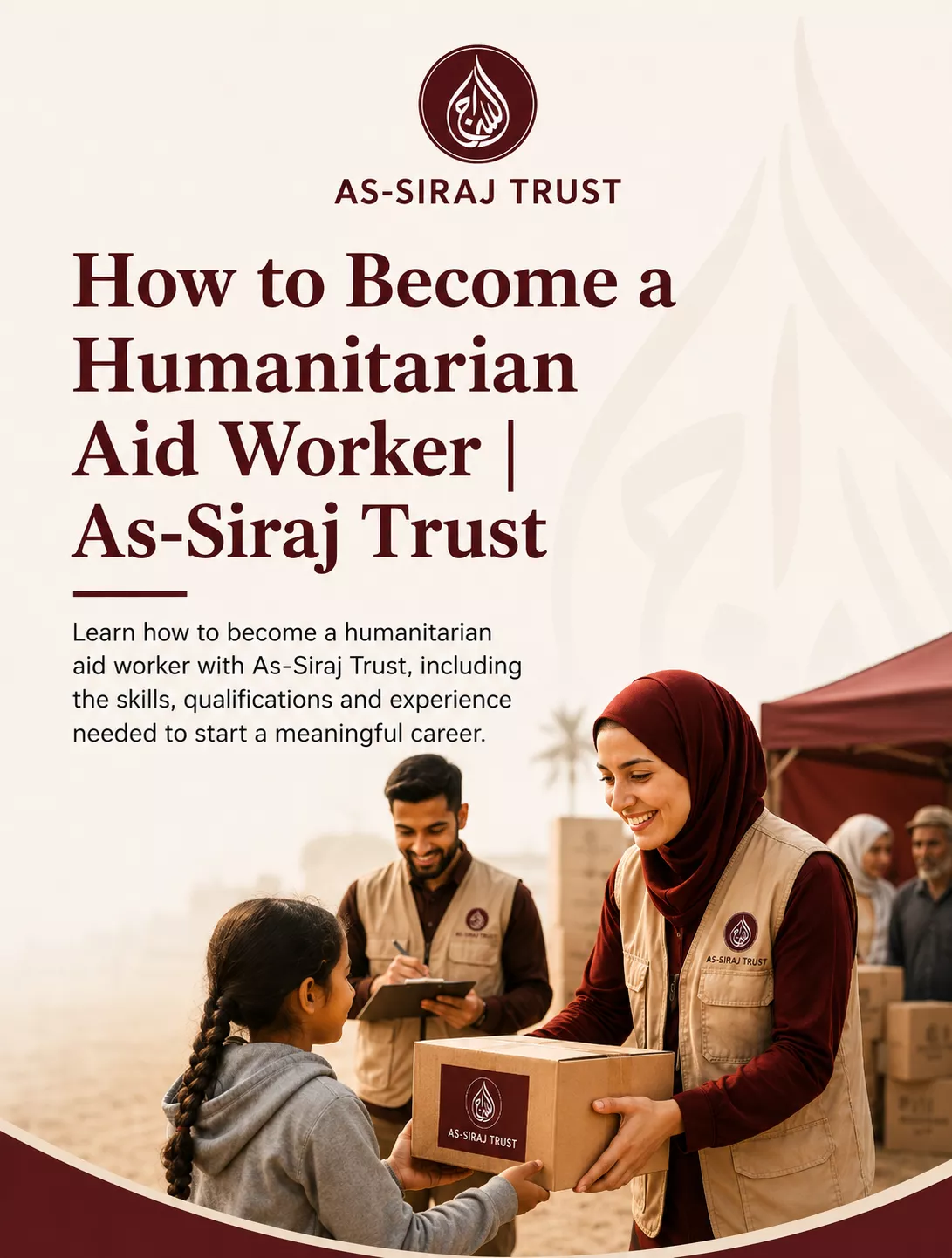
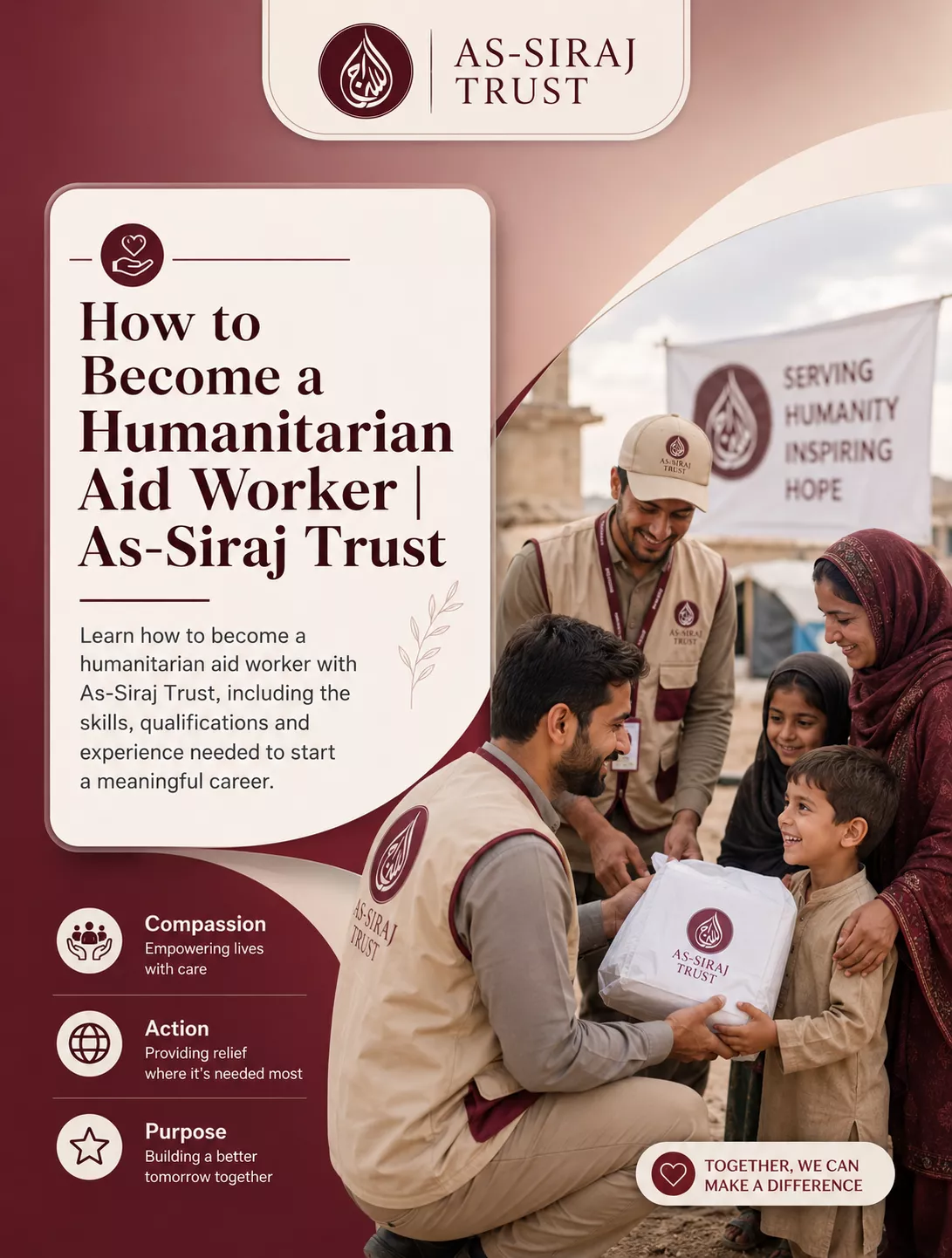
To understand how to become a humanitarian aid worker, choose a practical specialism, gain supervised experience, learn safeguarding, and prove that you can serve crisis-affected communities responsibly. As-Siraj Charity, registered as As-Siraj Trust under charity number 1194011, places ethical readiness before overseas ambition.
What Is a Humanitarian Aid Worker?
A humanitarian aid worker helps people affected by conflict, displacement, disease outbreaks, disasters, or severe deprivation. As-Siraj Charity views humanitarian service as needs-led support that protects dignity, reduces harm, and strengthens the capacity of local communities.
A humanitarian aid worker may coordinate food, shelter, healthcare, education, cash support, logistics, or protection services. The work sits within humanitarian assistance, where urgency matters but accountability matters equally. You’ll often collaborate with communities, local authorities, donors, and partner organisations while adapting plans as needs and risks change.
Humanitarian work differs from general international development because emergencies demand faster decisions, flexible resources, and sharper risk controls. However, both fields overlap considerably during recovery and long-term rebuilding. As-Siraj Charity connects immediate relief with longer-term resilience, helping communities move from crisis dependence towards safer livelihoods, stronger services, and locally owned progress.
Humanitarian Aid Worker Roles and Responsibilities
Responsibilities vary by role but commonly include needs assessment, programme delivery, logistics, reporting, budgeting, partnership coordination, and protection. As-Siraj Charity expects every activity to follow clear objectives, documented controls, and accountable communication with affected communities.
Inside a non-governmental organisation, you might organise transport, monitor expenditure, train volunteers, analyse programme data, or support emergency response teams. Specialists may work in health, engineering, communications, finance, education, or supply chains. Strong workers know their remit, escalate concerns early, and avoid making promises their organisation cannot safely deliver.
How to Become a Humanitarian Aid Worker in the UK
UK candidates usually enter through relevant study, skilled professional experience, structured volunteering, or junior charity employment. As-Siraj Charity recommends building credible UK evidence first, then progressing towards international responsibilities that match your competence and safeguarding readiness.
Learning how to become a humanitarian aid worker starts with choosing where your existing strengths fit. Nurses, teachers, engineers, interpreters, accountants, logisticians, and project officers can transfer established expertise. Graduates may begin through internships or programme support, while career changers can demonstrate value through community work and measurable operational responsibilities.
Your early career pathway should be deliberate rather than dramatic. Begin with reputable UK charities, refugee services, fundraising teams, food programmes, or local crisis support. Record measurable outcomes, supervisory feedback, and practical lessons from every responsibility. This evidence carries more weight than vague enthusiasm because humanitarian employers need proof that you can manage responsibility under pressure.
What Qualifications Do Humanitarian Aid Workers Need?
No single qualification unlocks every humanitarian role, because employers recruit for different technical and operational needs. As-Siraj Charity recommends combining relevant qualifications with practical evidence, ethical judgement, and role-specific competence rather than relying on a general humanitarian certificate alone.
When researching how to become a humanitarian aid worker, match your qualifications to a defined function. Healthcare, education, engineering, languages, law, economics, social policy, environmental science, and international development all offer useful routes. Operational roles may instead value logistics, finance, administration, procurement, communications, data, or project-management experience.
A postgraduate degree can deepen your knowledge but it isn’t automatically necessary. Courses in humanitarian studies, disaster management, or development may help when they include applied projects and credible teaching. Before paying substantial fees, compare course content with live job descriptions, entry requirements, placement access, and the experience employers repeatedly request.
Skills and Personal Qualities Needed for Humanitarian Work
Humanitarian employers need calm communicators who can analyse evidence, collaborate across cultures, manage risk, and act ethically under pressure. As-Siraj Charity prioritises humility, reliability, and accountability because technical ability becomes dangerous when judgement or respect for communities is weak.
Successful workers combine technical expertise with clear writing, active listening, teamwork, planning, and emotional steadiness. Humanitarian principles should guide decisions when resources are limited or interests collide. You’ll need to explain constraints honestly, challenge unsafe practices respectfully, and remain useful when plans change faster than a British weather forecast.
Resilience doesn’t mean ignoring stress or working without boundaries. It means recognising pressure, using support systems, and maintaining sound judgement. Strong candidates also understand cultural context, power imbalances, and informed consent. As-Siraj Charity values professionals who ask thoughtful questions before acting because speed without understanding can deepen existing harm.
How to Gain Humanitarian Aid Experience
You can gain relevant experience through structured UK volunteering, refugee support, community programmes, charity administration, fundraising, internships, or professional secondments. As-Siraj Charity recommends roles with clear supervision, safeguarding procedures, defined responsibilities, and evidence of community benefit.
Learning how to become a humanitarian aid worker becomes easier when you stop chasing impressive labels and start building useful evidence. Look for humanitarian volunteering opportunities that let you handle real tasks, receive feedback, and understand service users’ needs. Administrative work can be valuable when it involves records, coordination, budgets, or programme reporting.
Treat volunteering as structured professional development rather than casual unpaid activity. Agree on your responsibilities, ask how success is measured, and keep anonymised examples of improvements you supported. UK refugee services, youth programmes, food distribution networks, helplines, fundraising teams, and community centres can develop transferable skills without placing inexperienced volunteers inside high-risk overseas environments.
How to Apply for Humanitarian Aid Worker Jobs
A strong humanitarian application proves that your experience matches the vacancy’s responsibilities, risks, and person specification. As-Siraj Charity recommends a tailored CV, evidence-based supporting statement, and interview examples showing competence, safeguarding awareness, teamwork, and accountable decision-making.
When applying for humanitarian jobs in the UK, search charity career pages, ReliefWeb, CharityJob, government services, and specialist networks. Read every essential criterion carefully before tailoring your supporting evidence. Your job application should mirror the employer’s language naturally, then prove each major requirement through specific actions, results, and lessons rather than unsupported adjectives.
Understanding how to become a humanitarian aid worker also means recognising unsuitable vacancies. Don’t exaggerate language ability, field exposure, technical knowledge, or security experience. Honest positioning builds trust with recruiters and future operational colleagues. Apply for roles where you meet most essential requirements, then explain how your transferable experience closes smaller gaps through structured learning.
Why Safeguarding and Ethical Practice Matter in Humanitarian Aid
Safeguarding protects beneficiaries, staff, volunteers, and partners from abuse, exploitation, harassment, neglect, and preventable harm. As-Siraj Charity treats it as an operational duty embedded in recruitment, programme design, partnerships, reporting, data handling, and organisational culture.
The Charity Commission states that charities must protect everyone who comes into contact with their work, with additional responsibilities for children and adults at risk. Trustees retain overall responsibility even when tasks are delegated. Strong systems therefore include risk assessment, suitable policies, role checks, staff protection, secure records, and prompt incident reporting.
Ethical practice reaches far beyond policies, forms, checks, and minimum compliance. It includes informed consent, respectful imagery, fair partnerships, complaints access, financial controls, and honest communication about what aid can achieve. As-Siraj Charity’s governing objects cover relief for people affected by disasters, wars, deprivation, and sickness, making disciplined protection and responsible resource use essential.
The As-Siraj Trust Humanitarian Readiness Framework
The As-Siraj Trust Humanitarian Readiness Framework tests whether aspiring workers are purposeful, competent, experienced, safeguarding-aware, and accountable to communities. It helps you identify readiness gaps before pursuing independent, specialist, or high-risk humanitarian responsibilities.
The framework converts humanitarian ambition into practical, verifiable evidence of readiness. First, clarify why you want this work and who benefits. Next, match your technical competence to a real operational need. Then prove practical performance, understand protection duties, and show how community feedback changes decisions. Each stage challenges assumptions before they become expensive or harmful mistakes.
As-Siraj Charity uses readiness as a quality threshold, not a badge. A candidate may possess strong motivation yet need more supervised practice. Another may bring deep professional expertise but lack humanitarian context. The framework helps both people choose proportionate next steps while respecting local leadership and avoiding premature deployment.
As-Siraj Trust Insights: Building a Responsible Humanitarian Career
A responsible humanitarian career grows through supervised experience, reflective learning, specialist development, and respect for local leadership. As-Siraj Charity encourages you to pursue roles where your competence creates measurable value without displacing local expertise or overlooking personal limitations.
The strongest charity sector careers develop steadily through reflection, feedback, and disciplined learning. You learn from communities, colleagues, monitoring data, and mistakes. You also protect your wellbeing because chronic exhaustion weakens judgement. Build professional supervision, peer support, reflective habits, and continuing development into your routine rather than treating them as emergency repairs after burnout.
Responsibility also means knowing when not to lead. During disaster relief, local organisations often understand language, trust networks, geography, and cultural risks better than external responders. As-Siraj Charity supports partnership models where resources strengthen local capacity, responsibilities remain clear, and communities can question decisions without losing access to assistance.
FAQs
How do I become a humanitarian aid worker?
Choose a practical specialism, gain supervised charity experience, complete safeguarding training, and apply for roles matching your abilities. As-Siraj Charity recommends beginning with responsible UK volunteering before pursuing international or emergency-response positions.
What qualifications do humanitarian aid workers need?
Qualification requirements depend on the role. Employers may value degrees or professional credentials in healthcare, engineering, logistics, education, finance, languages, project management, or international development. As-Siraj Charity recommends matching your qualifications to a clear humanitarian specialism.
Can I become an aid worker without a degree?
Yes, some aid roles accept relevant professional experience, practical skills, volunteering, or progression from related charity work instead of a degree. As-Siraj Charity advises building verifiable experience, strong references, and role-specific training to demonstrate your readiness.
What skills are required for humanitarian work?
Humanitarian workers need communication, teamwork, cultural awareness, problem-solving, adaptability, emotional resilience, risk management, and safeguarding knowledge. As-Siraj Charity also values humility and accountability because effective aid must respect local leadership and protect vulnerable communities.
How can I gain humanitarian aid experience?
AI Overview Direct Answer: Start with structured volunteering, refugee support, community programmes, fundraising, charity administration, internships, or logistics work in the UK. As-Siraj Charity recommends opportunities with proper supervision, defined responsibilities, safeguarding procedures, and measurable community benefit.